The Ultimate Guide to B2B Lead Generation in Singapore
July 30, 2026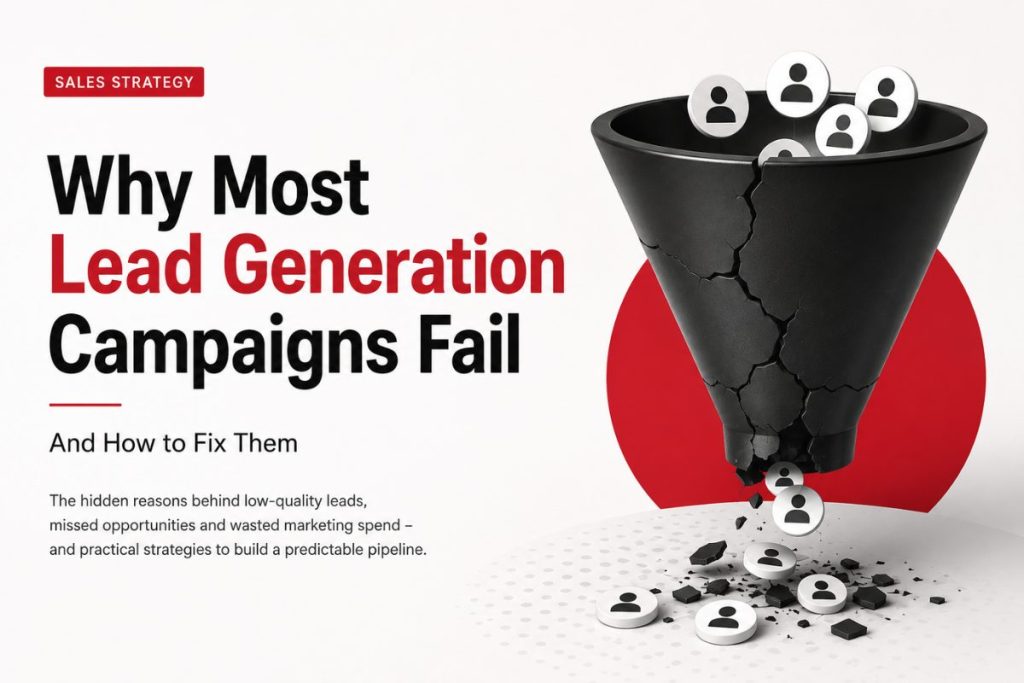
Why Most Lead Generation Campaigns Fail (And How to Avoid the Same Mistakes)
Many businesses invest time and money into lead generation with high expectations.
They launch advertising campaigns, purchase prospect databases, send cold emails or hire sales representatives — only to discover that the results fall short.
The immediate assumption is often:
“Lead generation doesn’t work.”
In reality, lead generation is rarely the problem.
More often, campaigns fail because the strategy, targeting or execution is flawed.
Successful lead generation isn’t about contacting more people. It’s about contacting the right people, with the right message, at the right time, through the right channels.
In this guide, we’ll explore the most common reasons lead generation campaigns fail and, more importantly, how businesses can avoid these costly mistakes.
What Does a Successful Lead Generation Campaign Look Like?
Before discussing failure, it’s important to define success.
A successful lead generation campaign doesn’t simply generate a large number of enquiries. It consistently delivers:
- Qualified prospects
- Meaningful business conversations
- Sales meetings
- Revenue opportunities
- A predictable sales pipeline
The goal isn’t activity.
The goal is business growth.
The 10 Most Common Reasons Campaigns Fail
Targeting the Wrong Audience
One of the biggest reasons campaigns fail is poor targeting. Many businesses try to market to everyone. The result? Their messaging becomes too broad and fails to resonate with anyone.
Before launching a campaign, ask yourself:
- Which industries benefit most from our solution?
- What size companies are we targeting?
- Who makes the buying decision?
- What business challenges are they facing?
- Why would they choose us over competitors?
The more clearly you define your ideal customer profile, the higher the quality of your leads.
Focusing on Quantity Instead of Quality
It’s easy to celebrate numbers like 500 leads generated, 2,000 emails sent, or 10,000 website visitors. But these metrics mean very little if they don’t result in qualified opportunities.
Many businesses measure activity instead of outcomes. A smaller number of highly qualified leads often delivers better business results than a large database of unqualified contacts.
Instead of asking “How many leads did we generate?” — ask “How many qualified sales opportunities did we create?”
Using Poor Quality Data
Even the best sales team struggles when working with outdated or inaccurate data. Common database issues include incorrect phone numbers, outdated email addresses, companies that no longer exist, wrong decision-makers, and duplicate records.
Poor data leads to lower response rates, wasted outreach efforts, frustrated sales teams and higher campaign costs. Investing in database quality before launching a campaign often produces better results than increasing your marketing budget.
Weak Value Proposition
Many outreach campaigns focus too much on the company and not enough on the prospect. For example: “We’re Singapore’s leading provider of…” — the prospect is thinking, “How does this help my business?”
A strong value proposition answers three questions immediately: what problem do you solve, why should the prospect care, and what outcome can they expect. Businesses buy solutions — not products or services.
Expecting Immediate Results
Lead generation is a process, not a one-time event. Decision-makers are busy. Many require multiple interactions before agreeing to a conversation.
Stopping a campaign after one email or one phone call often means giving up just before momentum builds. Successful campaigns rely on consistent, professional follow-up across multiple touchpoints. Persistence — when done respectfully — is often the difference between an ignored enquiry and a booked meeting.
Poor Lead Qualification
Not every interested prospect is ready to buy. Passing every enquiry directly to your sales team creates unnecessary workload and reduces closing efficiency.
Lead qualification helps determine whether a prospect has a genuine business need, decision-making authority, budget considerations, a realistic timeline, and interest in continuing the conversation.
Sales teams should spend their time closing qualified opportunities — not filtering enquiries.
No Clear Follow-Up Process
Many leads are lost because there is no structured follow-up. Common problems include no CRM updates, no scheduled follow-up calls, missed reminders, delayed responses, and inconsistent communication.
Every lead should have a defined next step. Whether it’s a follow-up call, an email or an appointment invitation, consistency keeps opportunities moving through the pipeline.
Measuring the Wrong KPIs
Many businesses judge campaigns using vanity metrics such as number of calls made, emails sent, click-through rates, and website traffic. While these metrics provide useful information, they don’t measure business success.
Instead, monitor metrics that directly impact revenue: conversations with decision-makers, qualified leads generated, sales meetings booked, proposal requests, opportunity conversion rate, customer acquisition cost, and revenue generated. The objective is to create profitable growth — not simply report activity.
Sales and Marketing Working in Silos
Marketing celebrates generating leads. Sales complains that the leads aren’t qualified. This disconnect is surprisingly common.
Effective lead generation requires both teams to agree on what defines a qualified lead, the ideal customer profile, lead handover criteria, follow-up expectations, and success metrics. Alignment between marketing and sales improves both lead quality and conversion rates.
Treating Lead Generation as a Short-Term Campaign
Some businesses launch lead generation only when sales slow down. Once enquiries increase, they stop prospecting. A few months later, the pipeline dries up — and the cycle repeats.
The most successful businesses view lead generation as an ongoing business development activity. Consistent outreach creates a healthier and more predictable sales pipeline.
What Successful Businesses Do Differently
High-performing lead generation campaigns share several common characteristics. Successful businesses:
- Define a clear ideal customer profile
- Invest in accurate prospect data
- Personalise outreach
- Follow structured qualification processes
- Nurture leads consistently
- Measure meaningful business outcomes
- Continuously optimise campaigns
Rather than chasing quick wins, they focus on building repeatable systems that generate long-term results.
A Better Lead Generation Framework
Instead of relying on disconnected activities, successful businesses follow a structured customer acquisition process.
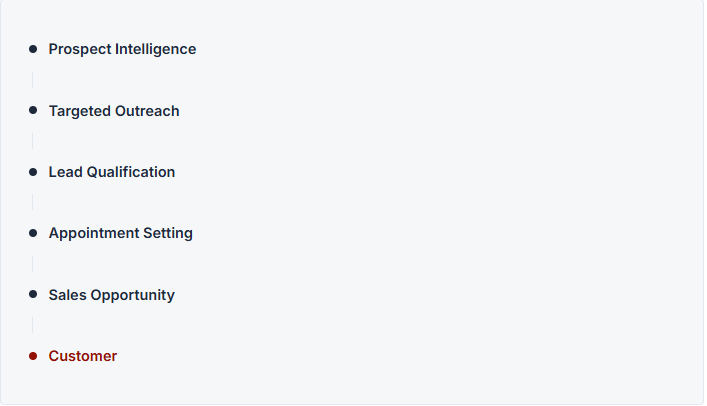
Every stage supports the next. When one stage is weak, the entire pipeline suffers.
How Scenes City Helps Businesses Build Better Campaigns
At Scenes City, we believe successful lead generation starts long before the first phone call or email. Our campaigns are built around a structured customer acquisition process that includes:
- Prospect database intelligence
- Target audience identification
- Personalised outreach
- Lead qualification
- Appointment setting
- CRM updates
- Campaign reporting and optimisation
Rather than focusing on call volumes or email counts, we focus on delivering qualified business opportunities that support long-term growth.
Ready to Improve Your Lead Generation Results?
Our structured lead generation approach combines prospect intelligence, professional outreach and lead qualification to deliver meaningful business opportunities — not just more contacts.
Frequently Asked Questions
Why do most lead generation campaigns produce poor-quality leads?
Poor targeting, weak messaging, inaccurate data and a lack of lead qualification are among the most common causes.
How long should a lead generation campaign run?
Lead generation is most effective as an ongoing activity. While campaign length varies by industry and objectives, consistency generally produces better results than short-term efforts.
Should every lead be passed directly to sales?
No. Leads should first be qualified to determine whether they match your ideal customer profile and are ready for a sales conversation.
Can SMEs benefit from structured lead generation?
Absolutely. A structured lead generation process helps SMEs build a consistent sales pipeline without relying solely on referrals or repeat business.
Conclusion
Lead generation doesn’t fail because businesses lack effort.
It fails when campaigns lack strategy, structure and consistency.
By targeting the right audience, maintaining quality data, qualifying opportunities and measuring meaningful outcomes, businesses can transform lead generation from a marketing expense into a reliable engine for growth.
Instead of chasing more leads, focus on building a process that consistently creates the right leads.
Ready to Improve Your Lead Generation Results?
If your business is struggling with low-quality leads, inconsistent sales opportunities or an unpredictable pipeline, Scenes City can help. Contact us today to learn how we can help you build a stronger, more effective lead generation strategy.