Appointment Setting: How to Turn Prospects into Sales Meetings
July 29, 2026
The Ultimate Guide to B2B Lead Generation in Singapore
July 30, 2026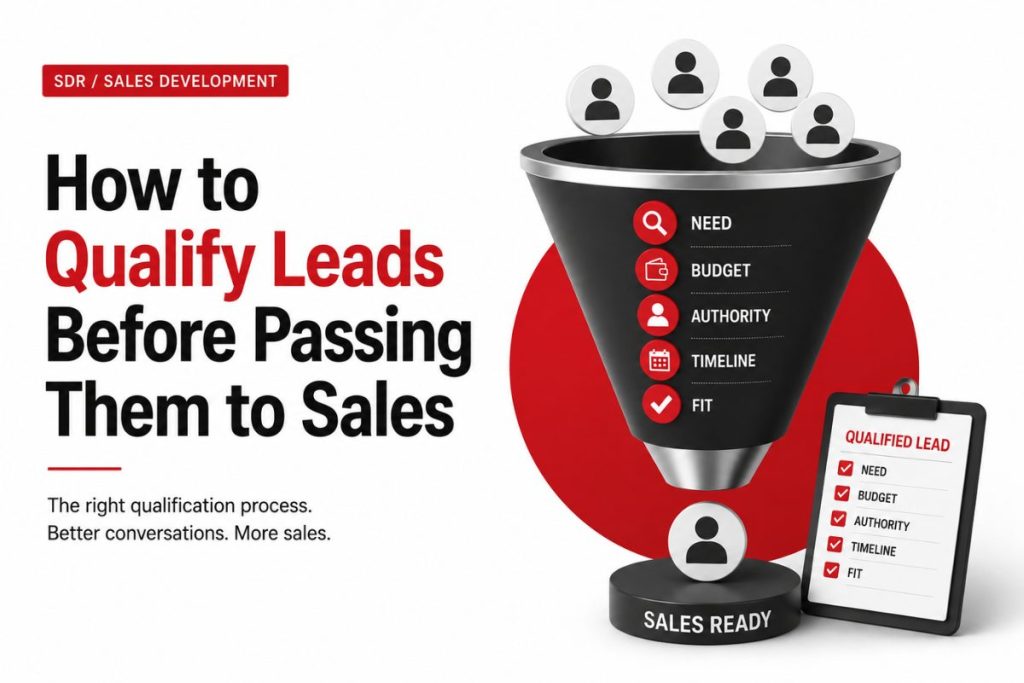
How to Qualify Leads Before Passing Them to Sales
One of the biggest frustrations shared by sales teams is receiving leads that simply aren’t ready to buy.
Marketing celebrates generating hundreds of leads.
Sales responds with:
“These aren’t qualified.”
The result?
Sales teams spend valuable time chasing prospects who have little interest, no purchasing authority or no immediate business need.
This disconnect doesn’t just reduce productivity — it also creates tension between marketing and sales.
The solution is lead qualification.
Lead qualification ensures that only prospects with genuine potential are passed to your sales team, allowing them to focus on what they do best: building relationships, presenting solutions and closing deals.
In this guide, we’ll explain what lead qualification is, why it matters and how businesses can create a structured qualification process that improves both sales efficiency and conversion rates.
What Is Lead Qualification?
Lead qualification is the process of evaluating whether a prospect is a good fit for your business before they are handed over to your sales team.
Rather than treating every enquiry equally, businesses assess whether the prospect matches their ideal customer profile and has a realistic chance of becoming a customer.
A qualified lead is more than someone who downloads a brochure or fills in a contact form.
A qualified lead is someone who has both interest and potential. This means understanding:
- Who they are
- What challenges they face
- Whether your solution fits their needs
- Whether they're ready for a sales conversation
Lead qualification helps businesses spend their sales resources more effectively while creating a better buying experience for prospects.
Why Lead Qualification Matters
Without a structured qualification process, every enquiry lands on your sales team’s desk. That creates several problems:
- Salespeople waste time pursuing unsuitable prospects.
- High-potential opportunities receive less attention.
- Conversion rates decline.
- Sales cycles become longer.
- Marketing and sales blame each other for poor results.
Lead qualification improves the quality of every sales conversation. Instead of asking sales representatives to identify whether someone is worth pursuing, your business has already completed that work before the handover.
Not Every Lead Is Sales Ready
A common misconception is that every lead should immediately become a sales opportunity.
In reality, prospects are at different stages of the buying journey.
Some are simply researching.
Others are comparing vendors.
Some are actively looking for a solution.
Others may not have a project planned until next year.
Understanding where a prospect sits within the buying journey allows your team to respond appropriately.
Sometimes the best outcome isn’t booking an appointment today — it’s building a relationship that leads to a future opportunity.
Marketing Qualified Leads (MQL) vs Sales Qualified Leads (SQL)
One of the most common causes of confusion is the difference between MQLs and SQLs.
Marketing Qualified Lead (MQL)
An MQL has shown interest in your business but may not yet be ready to speak with sales. Examples include someone who:
- Downloads an eBook
- Registers for a webinar
- Subscribes to your newsletter
- Visits key pages on your website
- Requests more information
These leads often require additional nurturing before becoming sales opportunities.
Sales Qualified Lead (SQL)
An SQL has demonstrated stronger buying intent and is ready for a conversation with your sales team. Typically, an SQL:
- Has a business need
- Matches your ideal customer profile
- Has decision-making influence
- Wants to discuss potential solutions
Understanding the distinction between MQLs and SQLs ensures that marketing and sales operate with the same expectations.
A Simple Lead Qualification Framework
Need
Does the prospect have a genuine business challenge that your solution can address? Without a clear need, there is little reason for the sales process to continue. Questions to consider:
- What problem are they trying to solve?
- Why are they looking now?
- What happens if they do nothing?
Decision-Making Authority
Are you speaking with someone who can make purchasing decisions? In B2B sales, the first person you speak with isn’t always the final decision-maker. Understanding the buying process early helps avoid delays later.
Timeline
When does the prospect expect to implement a solution? Some businesses are ready immediately. Others may be planning six or twelve months ahead. Knowing the timeline helps prioritise follow-up activities.
Budget
Budget conversations don’t always require exact numbers. Instead, determine whether the prospect has allocated resources for solving the problem. If no investment is planned, the opportunity may need further nurturing.
Fit
Even interested prospects may not be suitable customers. Consider factors such as:
- Industry
- Company size
- Business objectives
- Geographic location
- Product or service alignment
A strong fit increases the likelihood of long-term success for both parties.
Common Lead Qualification Questions
Effective qualification isn’t an interrogation. It should feel like a professional business conversation. Examples include:
- What challenges are you currently facing?
- What prompted you to explore solutions now?
- How are you managing this today?
- What would success look like for your business?
- Who else is involved in the decision-making process?
- Are you evaluating other options?
These questions provide valuable context while helping prospects feel understood rather than pressured.
Signs a Lead Is Ready for Sales
While every business is different, qualified leads often share several characteristics. They:
- Clearly describe a business problem.
- Ask detailed questions about solutions.
- Request demonstrations or consultations.
- Want pricing information.
- Involve decision-makers in discussions.
- Express a desire to move forward within a realistic timeframe.
When these signals appear, the opportunity is generally ready for a sales conversation.
Common Lead Qualification Mistakes
Treating Every Enquiry the Same
Not all leads have equal value. Prioritise opportunities that closely match your ideal customer profile.
Qualifying Too Late
Waiting until the first sales meeting to qualify a lead wastes valuable selling time. Qualification should happen before appointments are booked.
Asking Too Many Questions
Qualification should feel conversational. Focus on understanding the prospect’s situation rather than completing a checklist.
Ignoring CRM Updates
Qualification insights should always be recorded. Accurate CRM data helps sales representatives prepare more effective conversations and improves future marketing campaigns.
Rushing the Process
Not every lead needs immediate sales engagement. Some opportunities require education, follow-up and nurturing before they’re ready. Patience often leads to stronger long-term relationships.
The Role of Technology in Lead Qualification
Modern CRM systems and marketing automation tools can help businesses identify buying signals and organise lead information. Technology can:
- Score leads based on engagement.
- Track website activity.
- Record communication history.
- Schedule follow-ups.
- Organise customer data.
However, technology should support — not replace — human judgement. A conversation often reveals information that automated systems cannot.
How Scenes City Qualifies Leads
At Scenes City, lead qualification is a critical step in our customer acquisition process. Rather than passing every enquiry directly to your sales team, we help identify prospects with genuine business potential. Our qualification process considers:
- Business needs
- Company profile
- Buying readiness
- Appointment suitability
This allows your sales team to focus on productive conversations instead of spending time filtering enquiries.
Ready to Improve the Quality of Your Sales Leads?
Our lead qualification specialists identify high-potential opportunities, engage decision-makers and ensure your sales team receives leads that are ready for meaningful conversations.
Frequently Asked Questions
What is lead qualification?
Lead qualification is the process of determining whether a prospect has the right characteristics, interest and potential to become a customer before they are passed to sales.
Who should qualify leads?
This depends on your business model. Some organisations use marketing teams, while others rely on Sales Development Representatives (SDRs), telemarketing specialists or outsourced lead generation partners.
Does every lead need to be qualified?
Yes. Even simple qualification criteria help improve sales productivity and ensure resources are focused on the right opportunities.
What's the difference between lead qualification and appointment setting?
Lead qualification determines whether a prospect is suitable for sales. Appointment setting arranges a meeting with qualified prospects who are ready to continue the conversation.
Conclusion
Lead qualification is one of the most important steps in building a predictable sales pipeline.
Without it, sales teams waste valuable time chasing unsuitable prospects, while genuine opportunities risk being overlooked.
By implementing a structured qualification process, businesses can improve conversion rates, strengthen alignment between marketing and sales and create more productive customer conversations.
Remember, successful sales teams don’t necessarily speak to more people.
They speak to the right people
Ready to Improve the Quality of Your Sales Leads?
If your sales team is spending too much time filtering enquiries or chasing prospects that never convert, Scenes City can help. Contact us today to learn how our lead qualification and appointment setting services can help you build a more efficient and profitable sales pipeline.