

How Scenes City Telesolutions Supports Singapore Businesses In Effective Lead Generation
July 2, 2026
How to Qualify Leads Before Passing Them to Sales
July 30, 2026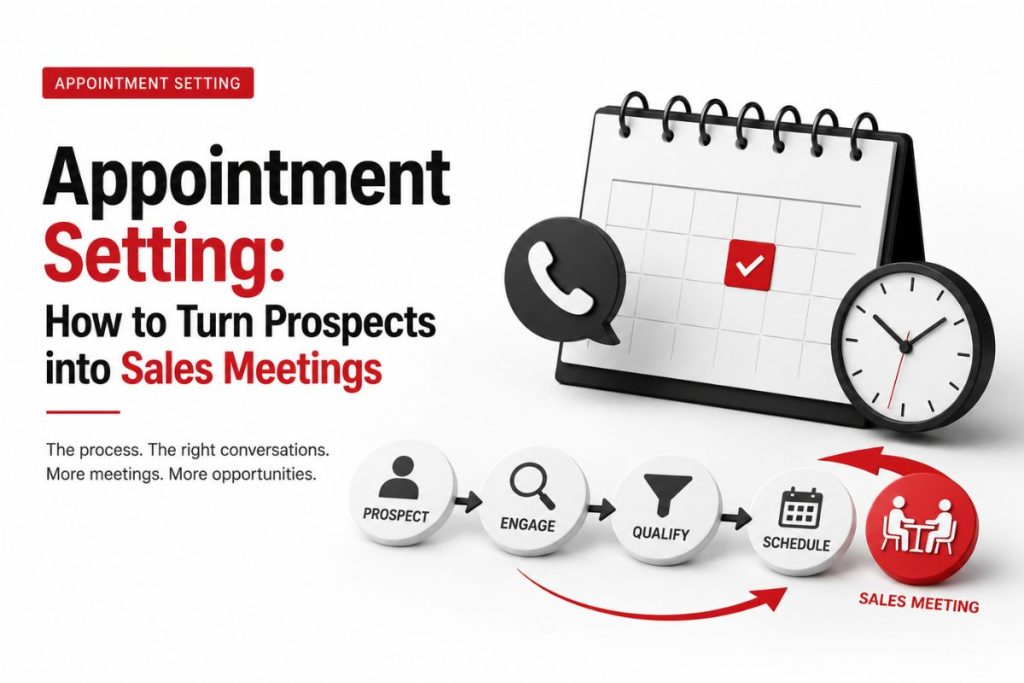
Appointment Setting: How to Turn Prospects into Sales Meetings
Generating leads is only half the battle.
Many businesses invest heavily in digital marketing, networking events, paid advertising and outbound prospecting, only to discover that enquiries don’t automatically become sales.
The missing link is often appointment setting.
A structured appointment setting process bridges the gap between initial interest and a meaningful sales conversation. Instead of asking your sales team to spend valuable time chasing prospects, appointment setting ensures they meet with qualified decision-makers who are ready to discuss their business needs.
Whether you’re a growing SME or an established enterprise, an effective appointment setting strategy can improve sales productivity, increase conversion rates and create a healthier sales pipeline.
In this guide, we’ll explain what appointment setting is, why it matters and how businesses can use it to turn prospects into real sales opportunities.
What Is Appointment Setting?
Appointment setting is the process of contacting potential customers, qualifying their interest and arranging a meeting between the prospect and your sales representative.
The objective isn’t to close the sale over the phone or email. Instead, the goal is to secure a conversation where your sales team can understand the prospect’s challenges, present solutions and move the opportunity forward.
Appointment setting is commonly used in industries where purchases involve consultation, demonstrations or multiple decision-makers, such as:
- Technology and SaaS
- Financial services
- Professional services
- Manufacturing
- Healthcare
- Commercial property
- Education and training
Why Appointment Setting Matters
Many salespeople spend a significant amount of time on activities that don’t directly generate revenue, such as:
- Searching for prospects
- Following up on cold enquiries
- Chasing unresponsive contacts
- Scheduling meetings
- Managing calendars
Every hour spent on these administrative tasks is an hour not spent selling.
A structured appointment setting process allows sales representatives to focus on what they do best — building relationships, presenting solutions and closing deals. Benefits include:
- More qualified sales meetings
- Better use of your sales team's time
- Higher conversion rates
- Shorter sales cycles
- A more predictable sales pipeline
Appointment Setting vs Lead Generation
Although the terms are often used interchangeably, they serve different purposes.
Converts qualified prospects into meetings
Creates direct sales conversations
Focuses on securing commitments
Moves opportunities further down the pipeline
Think of it this way:
Lead generation fills your pipeline. Appointment setting keeps it moving.
The Appointment Setting Process
Successful appointment setting follows a structured workflow.

Each stage plays an important role in ensuring your sales team meets prospects who are genuinely interested in exploring your solution.
Step 1: Identify the Right Prospects
Not every company is a suitable fit for your business. Before any outreach begins, define your ideal customer profile by considering:
- Industry
- Company size
- Business location
- Business challenges
- Purchasing potential
Targeting the right audience improves both meeting quality and conversion rates.
Step 2: Make Meaningful First Contact
The first conversation should focus on understanding the prospect — not delivering a lengthy sales pitch. Effective appointment setters:
- Introduce the purpose clearly
- Respect the prospect's time
- Ask relevant business questions
- Listen actively
- Create curiosity instead of pressure
The objective is to open a conversation, not force a commitment.
Step 3: Qualify the Opportunity
Before scheduling a meeting, confirm that the opportunity is worth your sales team’s time. Useful qualification areas include:
- Does the business have a genuine need?
- Is the prospect the decision-maker or an influencer?
- Is there a realistic timeline?
- Is there sufficient interest to continue the discussion?
A structured qualification process helps your sales team focus on opportunities with the greatest potential.
Related reading: How to Qualify Leads Before Passing Them to Sales.
Step 4: Handle Common Objections
Prospects may hesitate for many reasons. Common responses include:
- "We're busy."
- "We're already working with another provider."
- "Please send me information."
- "We're not looking right now."
Rather than treating objections as rejection, experienced appointment setters use them to better understand the prospect’s situation and determine whether future opportunities exist.
Professional conversations build trust — even when an immediate meeting isn’t scheduled.
Step 5: Confirm the Appointment
Once a prospect agrees to meet, ensure all details are confirmed. Include:
- Date and time
- Meeting platform or location
- Meeting agenda
- Expected participants
- Confirmation email or calendar invitation
Clear communication reduces confusion and improves attendance.
Why Some Sales Meetings Never Happen
Many businesses experience high no-show rates because the appointment process ends once a meeting is booked.
Successful appointment setting continues until the meeting takes place. Best practices include:
- Sending confirmation emails
- Providing calendar invitations
- Sending reminder messages
- Confirming attendance before the meeting
- Sharing any preparation materials
These simple steps can significantly improve meeting attendance.
Common Appointment Setting Mistakes
Targeting Everyone
Trying to book meetings with every prospect wastes valuable time. Focus on businesses that closely match your ideal customer profile.
Skipping Lead Qualification
Booking meetings with unqualified prospects often results in low-value sales conversations. Quality matters more than quantity.
Talking Too Much
Prospects are more likely to engage when conversations focus on their business challenges rather than your company. Ask questions before presenting solutions.
Giving Up Too Early
Many opportunities require multiple touchpoints before agreeing to a meeting. Professional follow-up is essential.
Poor Meeting Preparation
An appointment without context is difficult for your sales team to convert. Ensure relevant information is shared internally before the meeting.
Should You Outsource Appointment Setting?
Building an internal appointment setting team requires:
- Recruitment
- Training
- Process development
- Performance management
- Technology investment
For many SMEs, outsourcing provides a more scalable and cost-effective solution. An experienced appointment setting partner can:
- Reach more prospects
- Follow structured qualification processes
- Schedule qualified meetings
- Allow your sales team to focus on closing business
The right outsourcing partner becomes an extension of your sales function rather than simply a service provider.
How Scenes City Supports Appointment Setting
At Scenes City, appointment setting is part of a broader customer acquisition strategy. Our process focuses on delivering qualified sales opportunities — not simply filling calendars. Our services include:
- Target prospect identification
- Business outreach
- Lead qualification
- Appointment scheduling
- Meeting confirmations
- CRM updates
- Campaign reporting
By combining experienced outreach specialists with structured processes, we help businesses create meaningful conversations with the right decision-makers.
Ready to Book More Qualified Sales Meetings?
If your sales team is spending too much time prospecting and not enough time selling, Scenes City can help. Our appointment setting specialists work as an extension of your business to identify qualified prospects, engage decision-makers and schedule meaningful sales conversations.
Frequently Asked Questions
What is the difference between appointment setting and telemarketing?
Telemarketing covers a wide range of activities, including market research, customer engagement, lead generation and follow-up. Appointment setting is a specialised telemarketing activity focused specifically on arranging qualified sales meetings.
How many appointments should a business expect?
Results depend on factors such as your target market, offer, industry, database quality and campaign objectives. Success should be measured by the quality of meetings and the opportunities they create — not just the total number booked.
What makes a qualified appointment?
A qualified appointment typically involves a prospect who matches your ideal customer profile, has a relevant business need and has agreed to meet to explore potential solutions.
Can appointment setting work for SMEs?
Yes. Appointment setting helps SMEs build a more consistent sales pipeline without requiring their sales team to spend excessive time prospecting.
Conclusion
Appointment setting is more than filling a calendar.
It’s about creating meaningful sales conversations with businesses that have genuine potential to become customers.
When combined with strong lead generation, proper qualification and consistent follow-up, appointment setting becomes one of the most effective ways to improve sales productivity and accelerate business growth.
Instead of asking your sales team to spend hours chasing prospects, let them focus on what they do best — building relationships and closing deals.
Ready to Book More Qualified Sales Meetings?
Our appointment setting specialists work as an extension of your business to identify qualified prospects, engage decision-makers and schedule meaningful sales conversations. Contact us today to discover how our appointment setting services can help you build a stronger, more predictable sales pipeline.
